What We Do

Services

Everything we build, fix, and finish, spelled out.

HomeServices

Everything we take on

Every job below is one we do ourselves across Lakewood Ranch.

Deck Installation

We frame new decks on poured concrete footings sized for Florida's sandy soil, not just set on precast blocks. Joists get hung with galvanized or stainless hangers rated for exterior use, and the whole frame gets checked level before a single deck board goes down.

Custom Deck Design

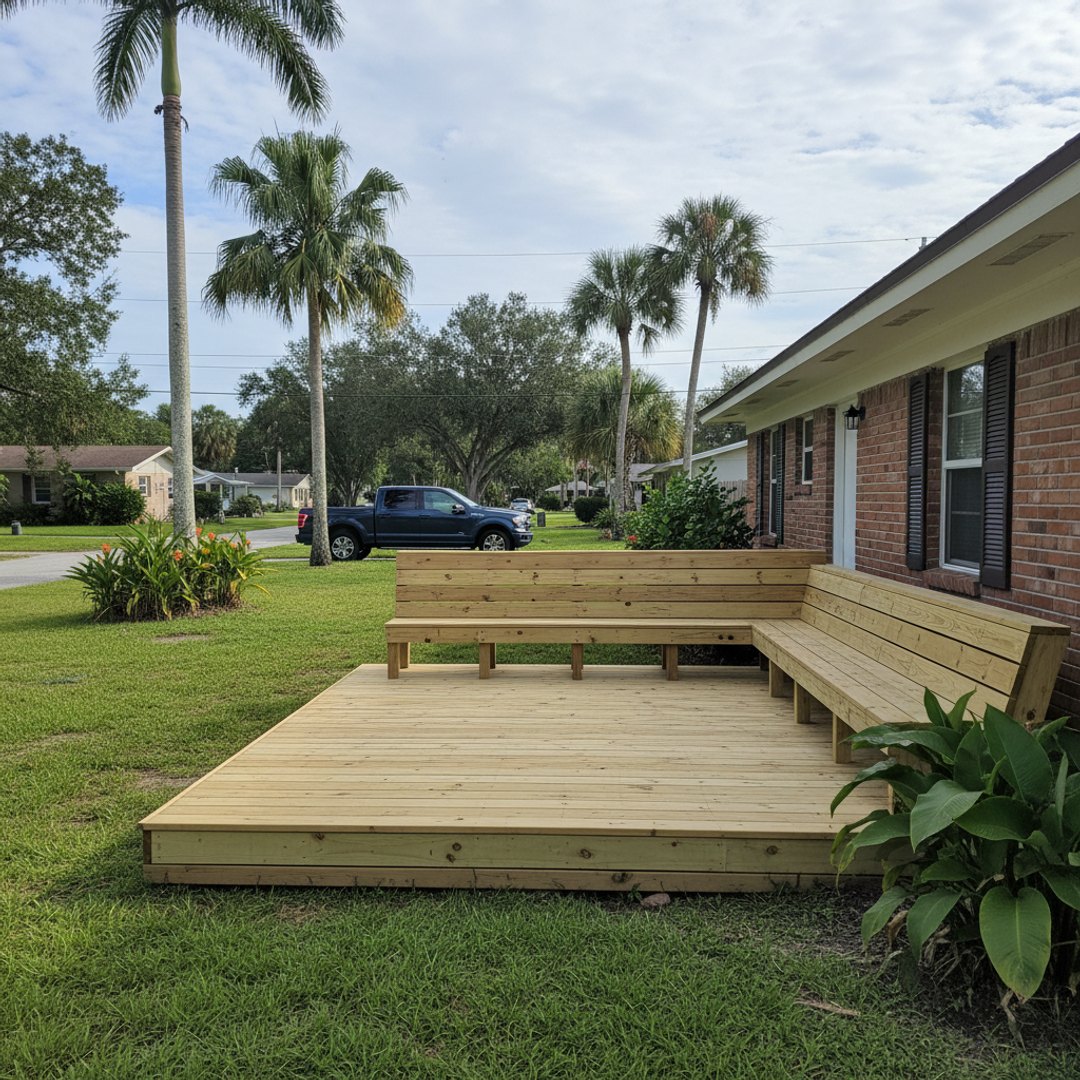
Multi-level decks, built-in benches, and layouts that wrap around an existing pool cage or slider door. We'll draw it out and walk you through the framing before it's built, so there are no surprises when the posts go in.

Deck Repair

A bouncy spot usually means a joist has rotted or a hanger has rusted through, not that the whole deck needs replacing. We sister in new lumber where we can and only pull boards that are actually bad.

Deck Staining & Sealing

Florida sun breaks down a clear sealer in about a year, sooner on a deck facing west. We strip, sand, and reseal with a finish rated for UV and standing humidity, and tell you honestly if your boards are past the point where stain will help.

Composite Decking

Composite boards don't splinter, don't need yearly staining, and hold up better against mold than pressure-treated pine does in our humidity. We install with hidden fastener systems so there's no screw heads showing on the surface.

Deck Railing Installation

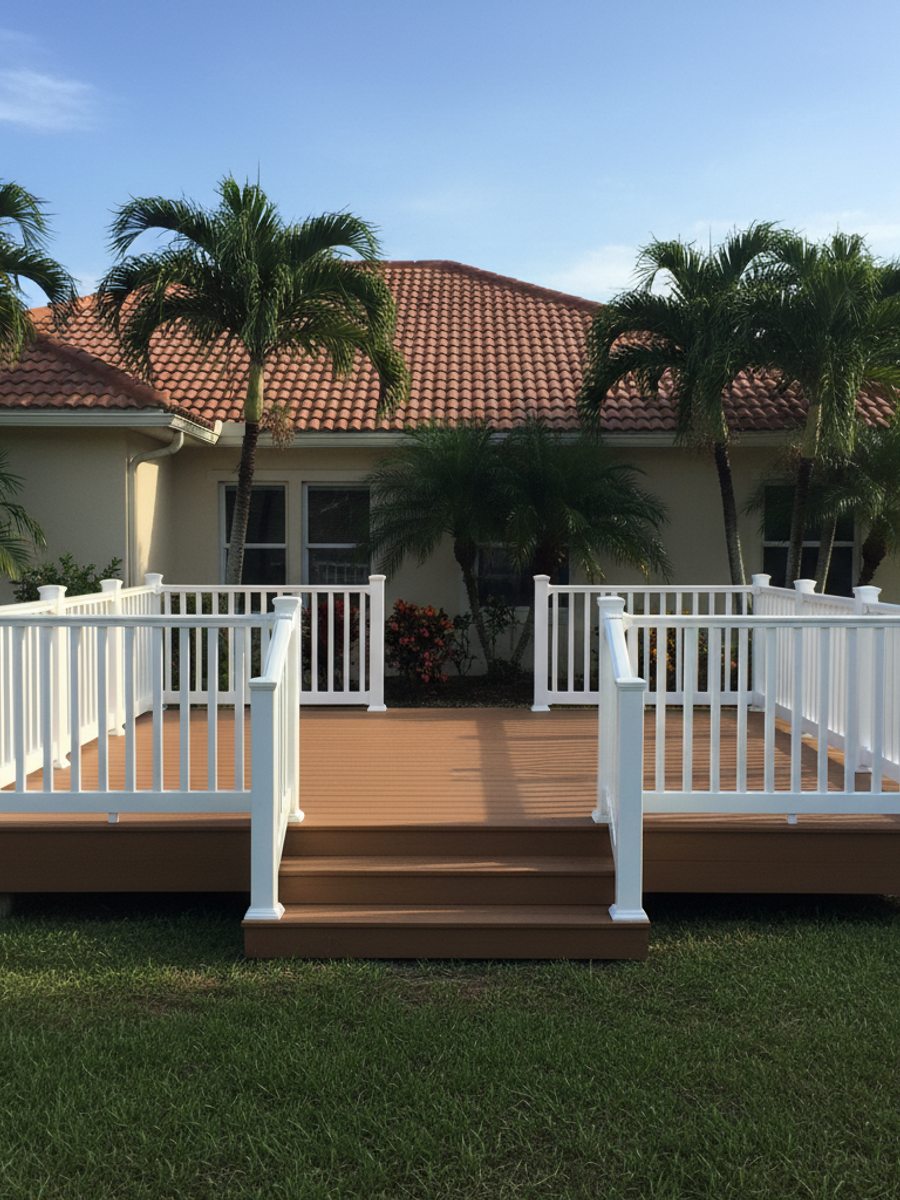
Guardrails get built to code height with baluster spacing under 4 inches, so a small kid can't slip through. Posts get anchored through the rim joist with lag bolts, not just toe-screwed into the decking.

Deck Board Replacement

Sometimes it's a handful of boards, not the whole deck. We match the species and spacing so the new boards don't stick out, and check the joist underneath each one before it goes back down.

Deck Ledger & Flashing Repair

Most deck failures start where the ledger board meets the house, if flashing was skipped or installed wrong. We pull the ledger, flash it with the siding lapped over top, and reattach with through-bolts instead of lag screws driven into siding.

Screened Deck Enclosures

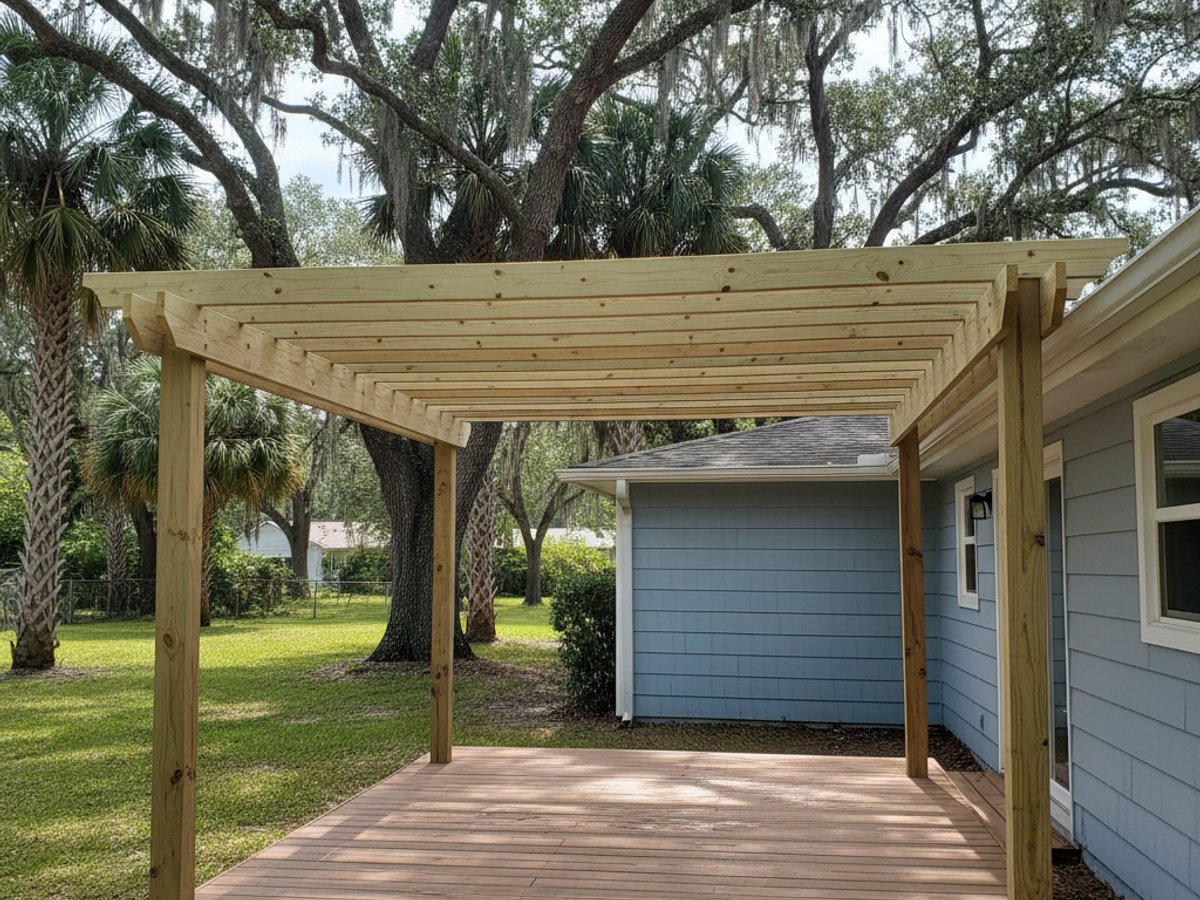
Adding a screen enclosure over an existing deck keeps out no-see-ums and mosquitoes without losing the outdoor feel. We tie the frame into the existing structure and check the footings can carry the extra load before we build up.

Deck Removal & Demolition

An old deck with rotted framing sometimes costs more to patch than to pull and start over. We'll tell you which one makes sense for your budget before you spend money on a repair that won't hold.

How It Works

Four steps, and no surprises in any of them.

01

We come and look

You tell us what you want doing, we look at what is actually there, and we ask the awkward questions early.

02

You get a price

In writing, itemised, free. If something might add cost later we flag it now rather than at the end.

03

We do the work

Same crew throughout. We cover your floors, keep the dust down and tidy up before we leave each day.

04

We walk it with you

You point out anything you are not happy with and we fix it before the invoice, not after.

Where We Work

All of this, across Lakewood Ranch, FL

Deck work within driving distance of Lakewood Ranch.

Lakewood Ranch, FL
North Port, FL
Sarasota, FL
Bradenton, FL
Venice, FL
Palmetto, FL
Parrish, FL
Sun City Center, FL
Ellenton, FL
Nokomis, FL
Osprey, FL
Longboat Key, FL
Common Questions

Things worth asking

Questions that come up once a project is underway.

Do I need a permit to build a deck in Florida?
Most counties in Florida require a building permit for any deck attached to the house or built more than 30 inches above grade. The process usually includes a footing inspection before decking goes down and a final inspection once railings are installed.
How long does it take to build a deck?
A standard single-level deck usually takes one to two weeks to build once permits are approved, including footing cure time. Multi-level decks, screened enclosures, or custom stairs can add another week or more.
Can a deck be built to fit a specific budget?
A deck budget can be adjusted by changing the footprint, switching from composite to pressure-treated pine, or simplifying the railing design. Pressure-treated lumber generally costs 30 to 50 percent less than composite decking for the same square footage.
Do you guarantee your deck work?
Reputable deck builders typically offer a workmanship warranty covering framing and installation, separate from the manufacturer's warranty on the lumber or composite boards themselves. It's worth getting the warranty length and coverage in writing before work starts.
Who do I deal with once the project starts?
On most deck projects, a single crew foreman handles day-to-day communication, while the office handles scheduling and permits. Asking upfront who to call with questions during the build avoids confusion once framing starts.
What materials are used for deck framing versus decking boards?
Framing is almost always pressure-treated pine for the joists, beams, and posts, rated for ground contact where it touches concrete footings. Decking boards can be pressure-treated wood, cedar, or composite materials like Trex or TimberTech, each with different upkeep requirements.
Can I still use my yard while the deck is being built?
Most of the yard stays usable during a deck build except the immediate work area, which gets fenced off or roped during footing excavation. Homeowners with pools should expect the pool cage area to be off-limits until posts and framing are set.
What should be done to the yard before deck construction starts?
Sprinkler heads, buried lines, and low-hanging tree limbs near the build site should be marked or moved before excavation for footings begins. A utility locate service should also be called to mark underground lines before any digging starts.
What happens if you find rot or damage once the old deck is opened up?
If hidden rot, termite damage, or a failed ledger connection turns up once old decking is pulled, the contractor should stop and explain the added cost before continuing. This is common on decks over ten years old and is usually handled with a change order rather than surprise billing.
How should a new deck be maintained after it's built?
Pressure-treated wood decks typically need restaining every one to two years in Florida due to UV and humidity exposure, while composite decking mainly needs periodic washing to prevent surface mold. Checking railing posts and fasteners for looseness once a year catches small problems before they become structural ones.

Not sure what you need?

Describe the problem and we will tell you what it probably is. No obligation.
Call (941) 347-9710