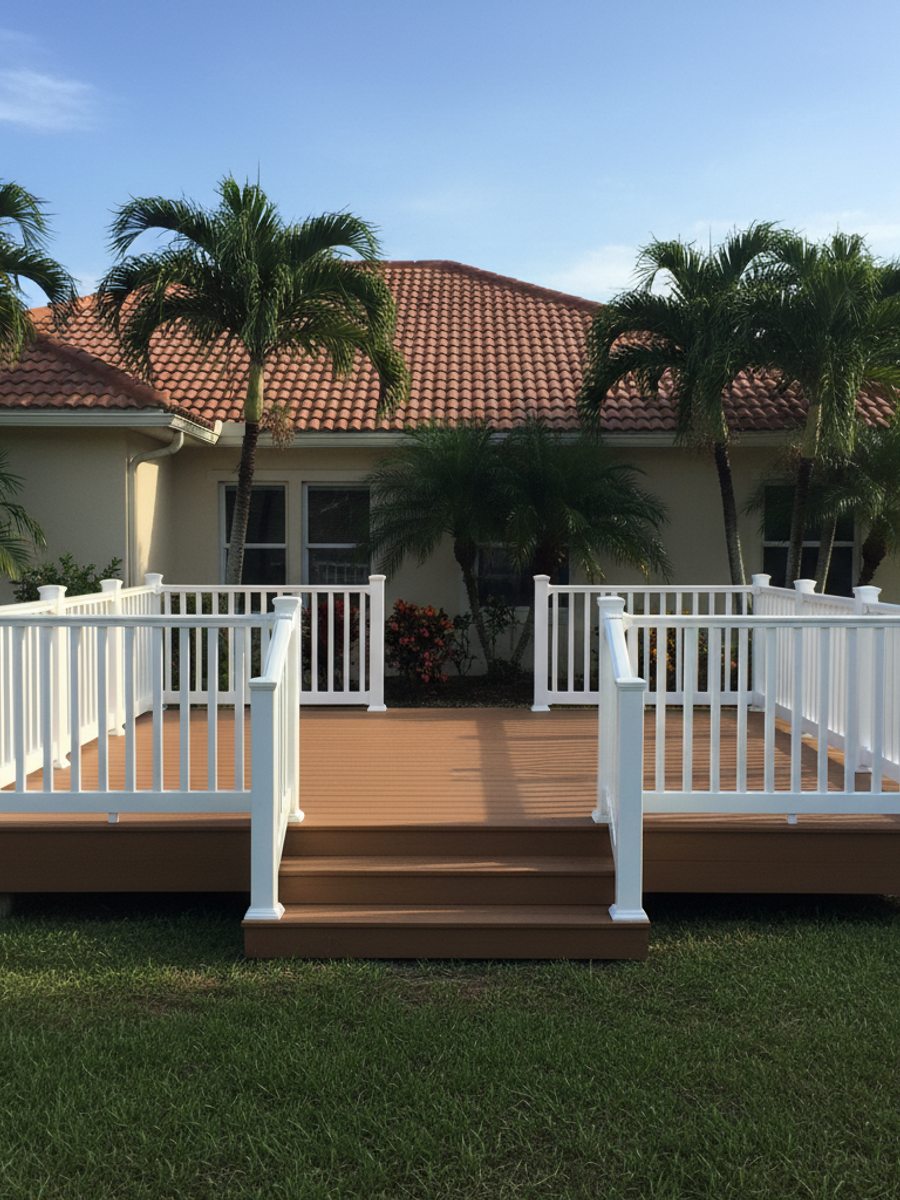
Lakewood Ranch sits on sandy soil for the most part, with pockets of fill dirt from when these subdivisions were graded out of old cattle and citrus land. Sandy soil drains fast, which is good for footings, but it also means a post footing that isn't dug deep enough or wide enough can shift over a few wet seasons. A deck builder who's worked this area knows the difference between soil on a lot in Country Club East and soil on an older street near Braden River that's had thirty years of fill settle into it.
Why the local ground and weather matter more than people think
This is hurricane country. June through November, decks here take wind loads that a builder in Ohio never has to think about. That changes how the ledger board gets attached to the house, how many hurricane ties go into the joists, and whether the railing posts get bolted or just screwed. A deck that looks fine in April can rack loose in the first named storm if the ledger flashing wasn't installed to shed water and the lag bolts weren't sized for the span. Ask any builder you're considering how they attach the ledger board and what fastener spacing they use. If they can't answer without checking a truck manual, that tells you something.
Humidity is the other factor. Summers here run wet, in the 90s with afternoon thunderstorms almost daily from June to September. Wood decking that isn't sealed within the first year checks and cups fast. Composite holds up better against rot but gets hot enough in full sun by July that some boards will burn bare feet, so board color and orientation actually matter here in a way they don't in a drier climate.
Licensing, insurance, and permits, and how to actually check them
Manatee County requires a permit for most attached decks, and for anything with a roof or screen enclosure over it. A decent-sized deck usually needs an inspection at footing stage, before the boards go down, and a final inspection before you use it. If a builder tells you permits aren't needed for your project, verify that yourself with the county rather than take their word for it. It's a five-minute phone call and it protects you if you ever sell the house and a buyer's inspector finds unpermitted structural work.
Lakewood Ranch also has HOA architectural review in almost every section of the community, from Summerfield to Greenbrook to the newer villages further east. That review usually covers railing style, decking color, and sometimes footprint against your setback line. A builder who's done work in your specific HOA will already know what gets rejected on first submission. That alone can save you weeks.
Ask for a license number and call it in yourself. Ask for proof of general liability and workers' comp, not just a claim that they have it. If someone falls off a ladder on your property and the crew isn't covered, that liability can land on you.
Questions that separate someone who's built decks from someone who's read about it
- What size footings are you planning, and how deep? For a typical deck in sandy soil here, footings often run 8 to 12 inches in diameter and down to about 24 inches, but it depends on the load and the span, and a real builder will explain why, not just quote a number.
- What fastener material are you using? Stainless or hot-dip galvanized holds up in this humidity. Cheap coated screws start rust-bleeding into composite boards within two summers.
- How are you flashing the ledger board? This is the single most common failure point on attached decks, and if the answer is vague, keep asking.
- How many days before the deck can be walked on, and before furniture goes on it? Concrete footings need real cure time, and a rushed schedule is often the first sign of a rushed job.
What to walk away from
Walk away from a quote with no mention of a permit. Walk away from anyone who wants a large deposit in cash with no contract. A written contract should spell out the decking material, the footing spec, the fastener type, and a rough timeline, not just a total price.
Be wary of a bid that's dramatically lower than the others. Decking material alone varies a lot: pressure-treated pine runs cheapest, wood-plastic composite sits in the middle, and PVC or capped composite costs more up front but doesn't need staining every couple of years. If one builder's price is way under the rest, they're usually cutting into footings, fasteners, or joist spacing to get there, and you won't see it until the deck starts to feel spongy in a few years.
Also walk away from anyone who won't put you in touch with a past customer or show you photos of a finished project with the framing still visible. A finished deck photo tells you about the stain color. A framing photo tells you whether they actually know what they're doing underneath it.
What a fair process looks like here
A builder who knows this area will talk through drainage before design, since a lot of Lakewood Ranch lots slope gently toward a retention pond or a swale, and a deck built without accounting for that grade can end up trapping water under it after a summer downpour. They'll mention termite pretreatment if there's any ground contact lumber involved, since subterranean termites are a real problem in this part of Florida and not an afterthought. They'll give you a realistic timeline that includes permit review, which in this county can add a couple of weeks depending on the season, rather than promising a deck built and finished in a long weekend.
None of this is complicated once you know what to ask. It just takes someone willing to answer plainly instead of talking around it. You can see our own approach to footings, materials, and permitting on Coastal Deck, and it's the same approach we'd tell you to look for from anyone else you're considering.